SCREEN PRINTING
Ink through a stencil
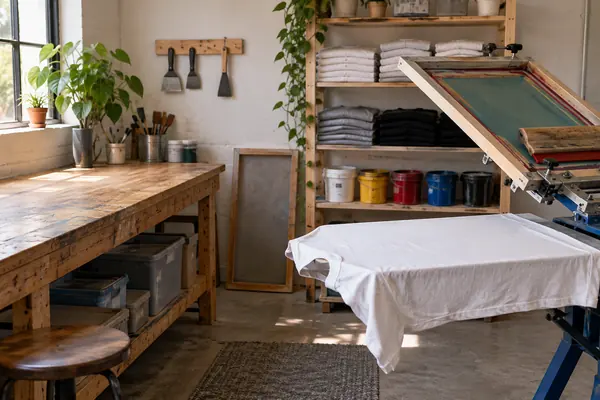
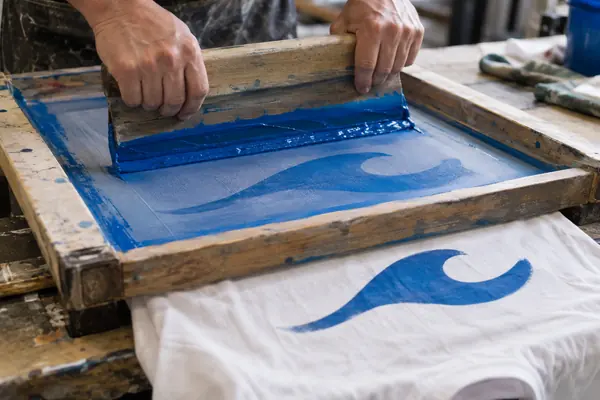
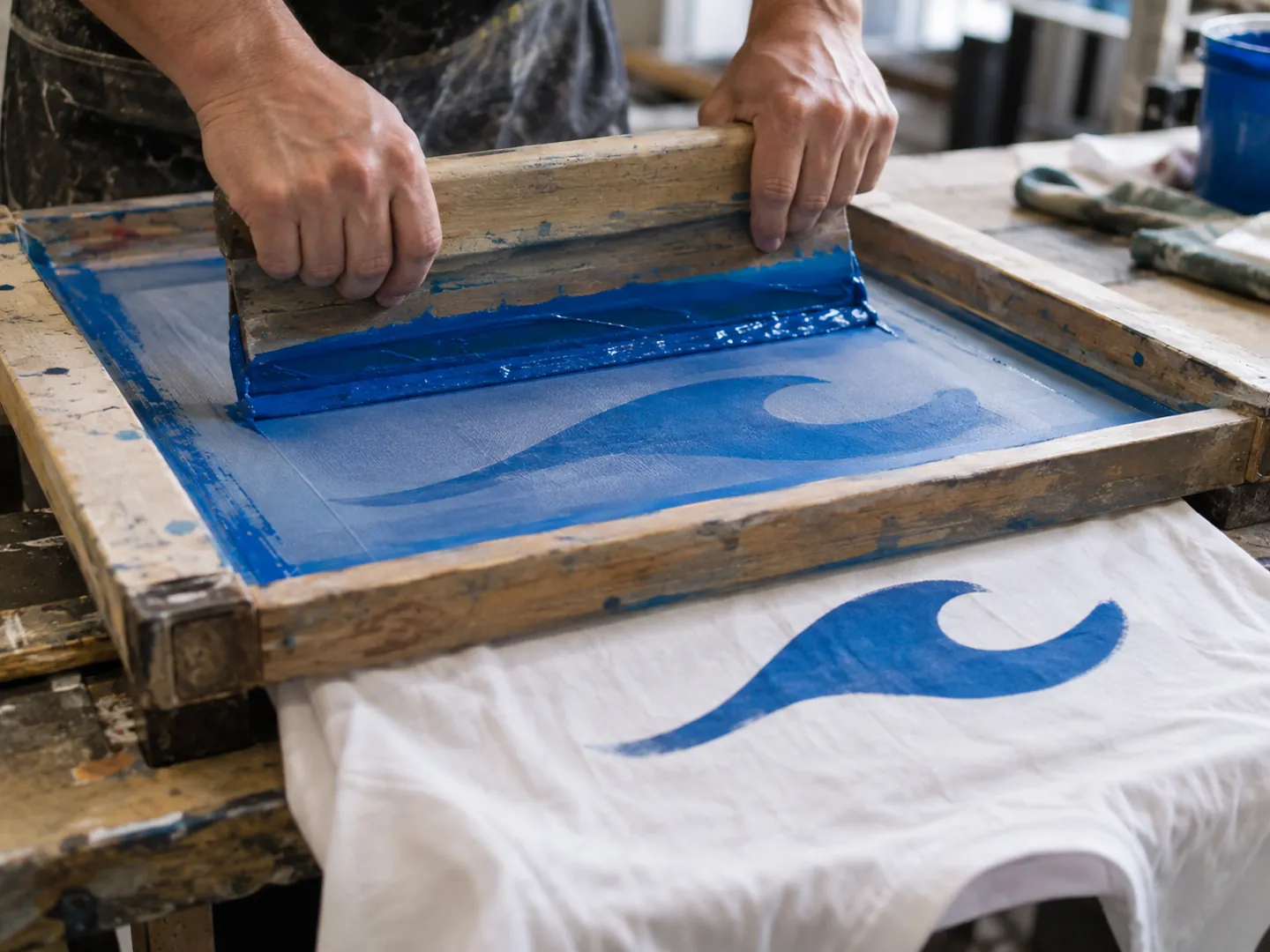
Parts of a fine mesh are blocked off and thick ink is pulled across with a squeegee, passing through only the open areas. Separate screens are usually used for each colour.
Match a method printgearwear
HOW PRINTED CLOTHES ARE MADE
Every printed T-shirt started as a choice of method.
1920s screen printing goes commercial
≈ 49% Share thrown in the rubbish bin each year
Some designs are pushed through a stencil with a squeegee, some are printed straight onto the fabric, and some are turned into a gas by heat. Each method suits different fabrics and colours.
THE SHORT ANSWER
The same design can be printed several ways.
The garment usually narrows the choice.
SCREEN PRINTING
Parts of a fine mesh are blocked off and thick ink is pulled across with a squeegee, passing through only the open areas. Separate screens are usually used for each colour.
Match a methodSUBLIMATION
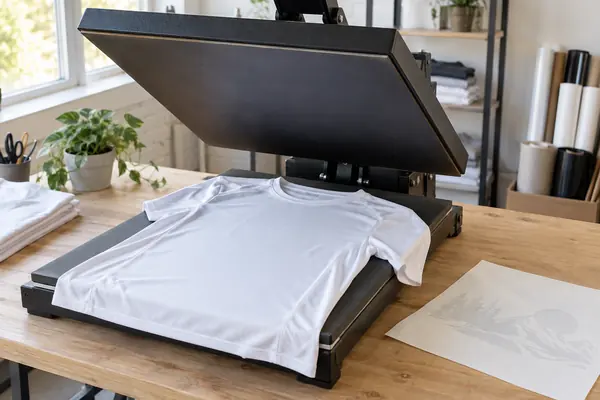
Dye-sublimation uses a heat press to transfer the design, and it only works on 100% polyester or specially coated items, on white or light colours.
See the numbersDIRECT PRINTING
Direct-to-garment printers print onto the fabric itself and suit white or light-coloured cotton. Film transfers can cover dark garments and many fabrics.
Before you orderA QUICK METHOD CHECK
Pick a digital printing method to see the fabrics it needs. The bar shows how wide a range of garments it can print on.
Based on the fabric requirements published by Syracuse University's MakerSpace for its own machines. Individual printers and inks vary.
FOUR THINGS TO CHECK
Whether you are ordering team shirts or trying a print yourself, these checks follow from how each method works.
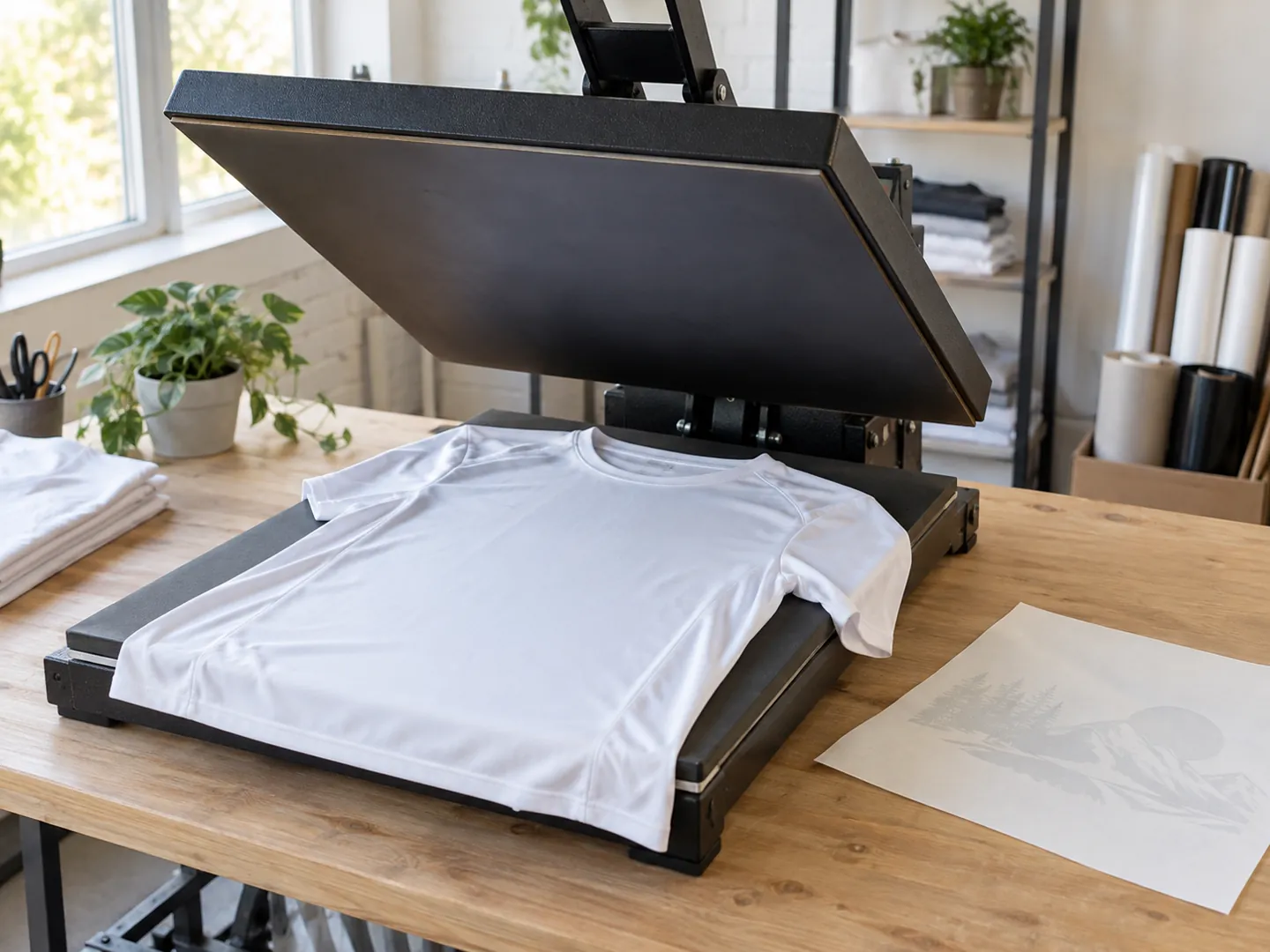
A white or light polyester top suits sublimation; a cotton tee does not. Light cotton suits direct-to-garment.
Screen printing usually needs a separate screen for each colour, so a simple design with few colours suits it best.
Sublimation and direct-to-garment printing need white or light fabric. Film transfers are listed for dark garments too.
When a printed shirt is finished with, donate it if it is in good condition, or take it to a textile bank to be recycled.
TWO NUMBERS WORTH KNOWING
One figure on where unwanted textiles go,
one on how many items that means.
≈ 49%
Share thrown in the rubbish bin each year
Recycle Now says around 49 percent of all unwanted textiles in the UK go in the rubbish bin each year.
UNWANTED TEXTILES · RECYCLE NOW
≈ 35 items
Items binned per person, per year
That is around 35 items per person each year. Clothes in good condition can be donated or sold for re-use, and worn-out ones recycled.
PER PERSON · RECYCLE NOW
Recycle Now says items not fit to pass on can be recycled into padding for chairs and car seats, cleaning cloths and industrial blankets.
A SHORT HISTORY
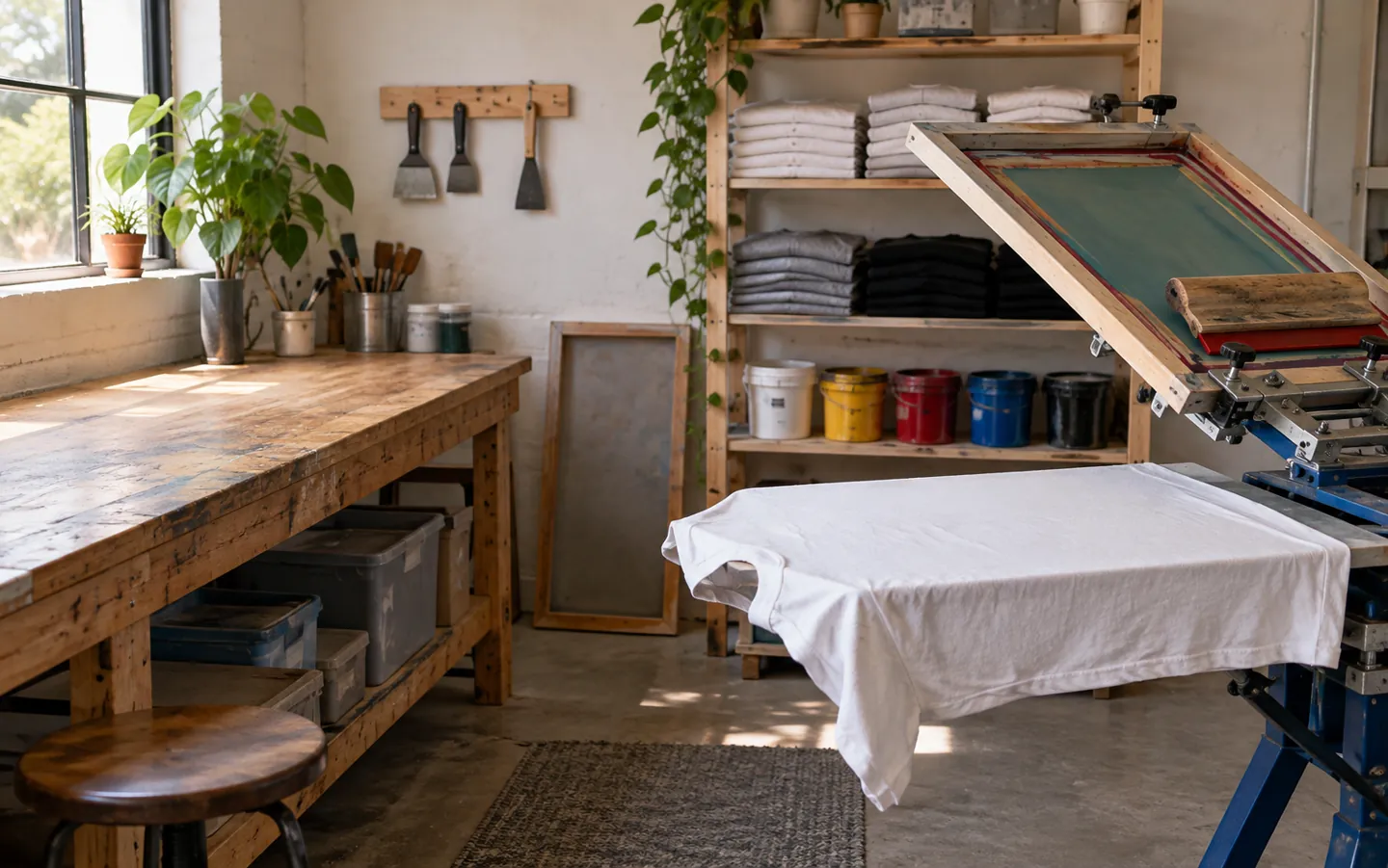
Tate says screen printing has been used commercially since the 1920s. It was first used by artists in 1930s America, where it was called serigraphy, and the name silkscreen comes from the silk originally used for the mesh.
The V&A notes it suits large, flat areas of colour and was widely adopted in the 1960s and 1970s for fine art prints and posters. Stencils can be painted on in glue or lacquer, cut from film, or made photographically with a light-sensitive resist.
Questions
A fine silk or synthetic mesh is stretched on a frame and parts of it are blocked with a stencil. Thick ink is pulled across with a squeegee and passes through only the open areas onto the material below.
Because silk was originally used for the mesh, Tate explains. Synthetic mesh is also used today.
Not according to Syracuse University's MakerSpace guidelines: dye-sublimation only works on 100% polyester, or on items made for sublimation with a polymer coating.
A printer that puts the design straight onto the garment. The MakerSpace's DTG printer needs white or light-coloured cotton, from 50 to 100% cotton.
Recycle Now says clothes in good condition can be donated or sold for re-use, and others recycled at textile banks or through local collections.
Updated
ABOUT THIS NAME
printgearwear.com is part of the DoodleSale portfolio. It isn't in an auction right now, but you can ask about leasing it.